By
Sanjana Chavali
June 4, 2026
•
7
min read

Most organizations measure training success the same way: completion rates.
"We trained 500 people. 95% completed the course. Success."
But here's what that number actually tells you: 475 people clicked through a course.
It tells you nothing about whether they learned anything. Whether they retained it. Whether they changed their behavior. Whether the training created business value.

It's activity, not outcome.
Here's the scenario:
A retail chain invests ₹25 lakhs in a training program.
They measure success: 88% completion rate. Great. That's a strong number.
They declare victory.
But six months later, they ask an uncomfortable question: Did compliance improve? Did sales improve? Did retention improve?
The answer: We don't know. We only tracked completion.
This is the ROI measurement gap. Most companies measure inputs (did people take the training?) instead of outputs (did it create business value?)
Real training ROI measurement answers a specific question: Did this training create measurable business change?
Not: "Did people complete it?"
But: "Did it drive the outcome we wanted?"
Here are the outcomes that actually matter:
Note: The examples below are illustrated scenarios used to show how training ROI can be measured.
Outcome 1: Behavioral Change
Did staff actually implement what they learned?
Audit before training: Food safety score 65%
Training completed: 88% completion rate
Audit after training: Food safety score 78%
Now you have a real number. Training is now a 13-point improvement in measured behavior.
That's outcome-based measurement.
Outcome 2: Compliance Improvement
Did violation rates decrease?
Violations before training: 12 per quarter
Training completed: 95% completion
Violations after training: 4 per quarter
Now you know: This training reduced violations by 67%.
Outcome 3: Performance Metrics
Did business metrics move?
Sales per employee before training: ₹45,000/month
Training completed: 92% completion
Sales per employee after training: ₹52,000/month
The training correlated with a 15% increase in productivity.
Outcome 4: Retention Impact
Did people stay longer?
Turnover before training program: 45% annually
Training implemented across organization
Turnover after 6 months: 38% annually
Lower turnover means training created an environment where people saw growth.

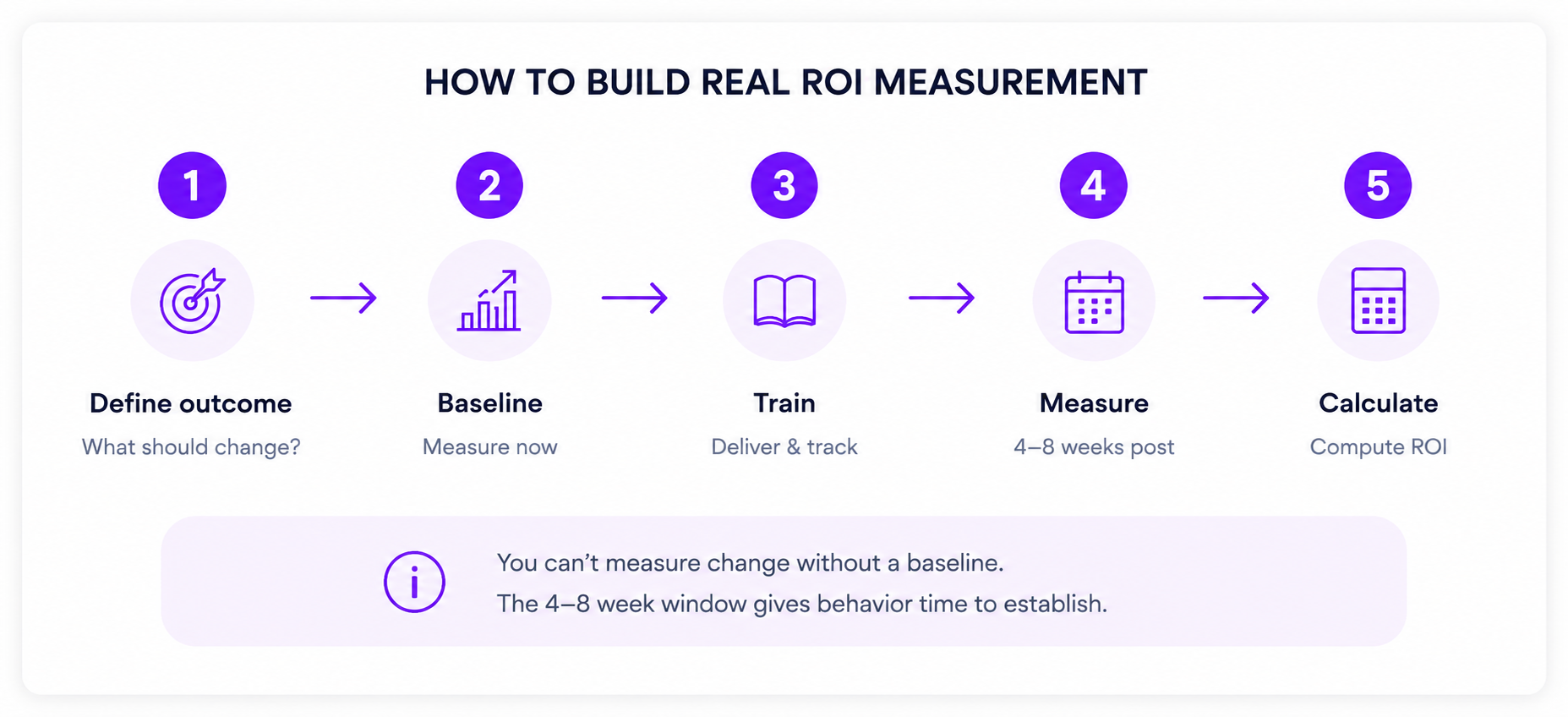
Step 1: Define the Outcome You Want
Not "completion," but "what should change because of this training?"
Examples:
Be specific, measurable, tied to business value.
Step 2: Establish Baseline
Before training, measure the current state:
You can't measure change without a baseline.
Step 3: Deliver Training
Track completion, yes. But more importantly, track engagement:
Step 4: Measure the Outcome
After training (give it 4-8 weeks to take effect), measure again:
Compare baseline to post-training. That gives you measurable impact data you can use to calculate ROI.
Step 5: Calculate the Business Value
Now you have real data from Steps 2 and 4:
Calculate business value from that data.
Example:
Violations before: 12 per quarter | Violations after: 4 per quarter | Reduction: 8 violations prevented per quarter
Cost per violation: ₹50,000 (regulatory fine, brand damage, operational disruption)
Value created: 8 × ₹50,000 = ₹4 lakhs per quarter = ₹16 lakhs annually
Training cost: ₹10 lakhs
Estimated ROI: (₹16 lakhs - ₹10 lakhs) ÷ ₹10 lakhs = 60%
Now you have a number that matters.
Not: "95% completion."
But: "₹16 lakhs in annual risk reduction and a 60% Year 1 ROI."
That's the difference between reporting activity and demonstrating business impact.
Here's where many organizations miss the biggest opportunity.
The best measure of training effectiveness isn't a test score. It's behavior.
Can the person actually do the job better than before?
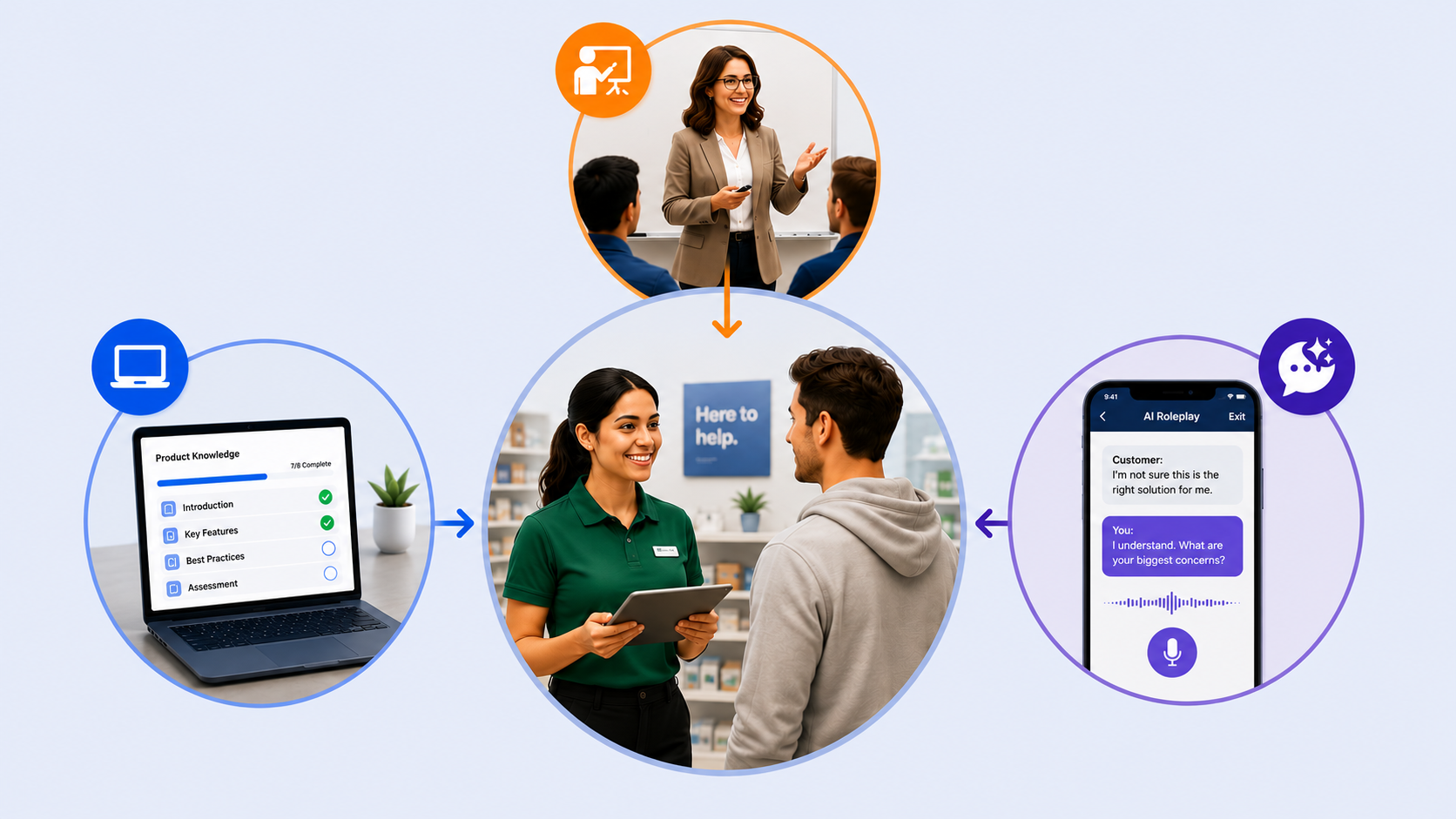
This is where unified systems create value. When training and operational data are connected, you can measure this directly.
Training module: Food safety procedures
Completion: 95%
Knowledge test: 88% pass rate
Behavior validation: Post-training audit shows 78% of trained staff demonstrate proper food safety behavior in actual audits (vs. 65% baseline before training)
That last number, 78%, is the real outcome. Not completion. Not test scores. Actual competency demonstrated in real work.
When you can see this, you can ask better questions:
Now you can optimize based on what actually works.
Companies that measure training ROI properly move from hope-based to evidence-based decision-making.
Instead of: "We hope this training helps"
You get: "Post-training, violations dropped from 12 per quarter to 4 per quarter (67% reduction). At ₹50,000 cost per violation, this prevented ₹16 lakhs in annual losses."
That's not hope. That's evidence.
And with evidence, you can:
When you're considering a training investment, ask yourself:
"Can I measure whether this training actually changed behavior? Not just whether people completed it, but whether they actually do their job better?"
If the answer is "not really," that's a problem. Because then you're investing based on hope, not evidence.
You now know:
Your next step: Pick one training program you've invested in recently.
Ask: Did it change the behavior you wanted? Do you have data showing improvement in audits, compliance, sales, or retention?
If you don't have that data, that's your next opportunity.


Most organizations measure training success the same way: completion rates.
"We trained 500 people. 95% completed the course. Success."
But here's what that number actually tells you: 475 people clicked through a course.
It tells you nothing about whether they learned anything. Whether they retained it. Whether they changed their behavior. Whether the training created business value.
It's activity, not outcome.
Here's the scenario:
A retail chain invests ₹25 lakhs in a training program.
They measure success: 88% completion rate. Great. That's a strong number.
They declare victory.
But six months later, they ask an uncomfortable question: Did compliance improve? Did sales improve? Did retention improve?
The answer: We don't know. We only tracked completion.
This is the ROI measurement gap. Most companies measure inputs (did people take the training?) instead of outputs (did it create business value?)
Real training ROI measurement answers a specific question: Did this training create measurable business change?
Not: "Did people complete it?"
But: "Did it drive the outcome we wanted?"
Here are the outcomes that actually matter:
Note: The examples below are illustrated scenarios used to show how training ROI can be measured.
Outcome 1: Behavioral Change
Did staff actually implement what they learned?
Audit before training: Food safety score 65%
Training completed: 88% completion rate
Audit after training: Food safety score 78%
Now you have a real number. Training is now a 13-point improvement in measured behavior.
That's outcome-based measurement.
Outcome 2: Compliance Improvement
Did violation rates decrease?
Violations before training: 12 per quarter
Training completed: 95% completion
Violations after training: 4 per quarter
Now you know: This training reduced violations by 67%.
Outcome 3: Performance Metrics
Did business metrics move?
Sales per employee before training: ₹45,000/month
Training completed: 92% completion
Sales per employee after training: ₹52,000/month
The training correlated with a 15% increase in productivity.
Outcome 4: Retention Impact
Did people stay longer?
Turnover before training program: 45% annually
Training implemented across organization
Turnover after 6 months: 38% annually
Lower turnover means training created an environment where people saw growth.
Step 1: Define the Outcome You Want
Not "completion," but "what should change because of this training?"
Examples:
Be specific, measurable, tied to business value.
Step 2: Establish Baseline
Before training, measure the current state:
You can't measure change without a baseline.
Step 3: Deliver Training
Track completion, yes. But more importantly, track engagement:
Step 4: Measure the Outcome
After training (give it 4-8 weeks to take effect), measure again:
Compare baseline to post-training. That gives you measurable impact data you can use to calculate ROI.
Step 5: Calculate the Business Value
Now you have real data from Steps 2 and 4:
Calculate business value from that data.
Example:
Violations before: 12 per quarter | Violations after: 4 per quarter | Reduction: 8 violations prevented per quarter
Cost per violation: ₹50,000 (regulatory fine, brand damage, operational disruption)
Value created: 8 × ₹50,000 = ₹4 lakhs per quarter = ₹16 lakhs annually
Training cost: ₹10 lakhs
Estimated ROI: (₹16 lakhs - ₹10 lakhs) ÷ ₹10 lakhs = 60%
Now you have a number that matters.
Not: "95% completion."
But: "₹16 lakhs in annual risk reduction and a 60% Year 1 ROI."
That's the difference between reporting activity and demonstrating business impact.
Here's where many organizations miss the biggest opportunity.
The best measure of training effectiveness isn't a test score. It's behavior.
Can the person actually do the job better than before?
This is where unified systems create value. When training and operational data are connected, you can measure this directly.
Training module: Food safety procedures
Completion: 95%
Knowledge test: 88% pass rate
Behavior validation: Post-training audit shows 78% of trained staff demonstrate proper food safety behavior in actual audits (vs. 65% baseline before training)
That last number, 78%, is the real outcome. Not completion. Not test scores. Actual competency demonstrated in real work.
When you can see this, you can ask better questions:
Now you can optimize based on what actually works.
Companies that measure training ROI properly move from hope-based to evidence-based decision-making.
Instead of: "We hope this training helps"
You get: "Post-training, violations dropped from 12 per quarter to 4 per quarter (67% reduction). At ₹50,000 cost per violation, this prevented ₹16 lakhs in annual losses."
That's not hope. That's evidence.
And with evidence, you can:
When you're considering a training investment, ask yourself:
"Can I measure whether this training actually changed behavior? Not just whether people completed it, but whether they actually do their job better?"
If the answer is "not really," that's a problem. Because then you're investing based on hope, not evidence.
You now know:
Your next step: Pick one training program you've invested in recently.
Ask: Did it change the behavior you wanted? Do you have data showing improvement in audits, compliance, sales, or retention?
If you don't have that data, that's your next opportunity.
Join the brands building better frontline workforces. Live in 50 days. No IT complexity. Dedicated support from day one.



.png)


.jpg)
.png)
.jpg)
.png)
.png)
.png)