By
Sanjana Chavali
June 19, 2026
•
8
min read

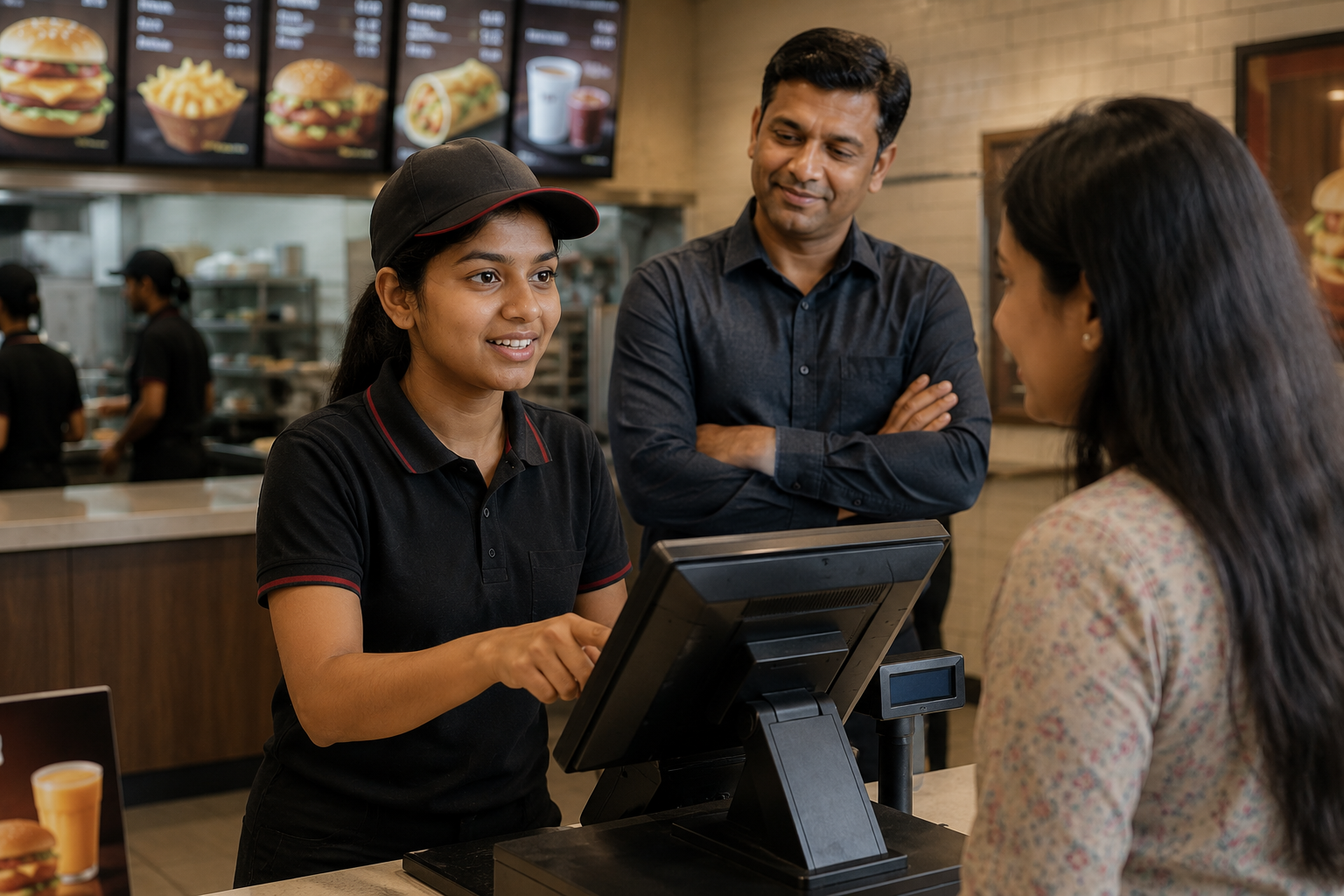
Peak hour on a Friday night: your store is packed, three staff members are on the floor, a customer becomes upset about a return. Another customer has a question about a promotion. A third wants to complain about a product issue.
Your staff have been trained on all of this. Returns, promotions, complaint handling. They've completed the courses. They scored well on assessments.
But now it's happening all at once. The pressure is different. The stakes feel higher. And instead of executing what they learned, they freeze.
This happens in every retail environment. The gap between training and execution under pressure is where most training programs fail.
As we explored in our first post, training happens in isolation (a quiet room, structured scenarios, unlimited time to think).
But the gap between controlled training conditions and real-world pressure is even starker than the gap between training and understanding. Real work adds a layer that no classroom can replicate: stress.
And stress changes everything.
An upset customer appears, but they're not alone: two other staff are also busy, the manager is on break, the music is loud, and there's a line forming behind this customer.
Now the staff member's nervous system is activated (adrenaline is up, the ability to think clearly decreases), the customer is more upset than in the training video, and the situation has nuances not covered in training.
The staff member freezes, reverts to scripted responses that don't fit the situation, or calls a manager.
This happens not because they're untrained, but because training under calm conditions doesn't prepare you for execution under pressure.
1. Stress narrows focus. Under pressure, your brain focuses on survival, not problem-solving. Training that didn't include stress inoculation doesn't help.
2. Complexity increases in reality. Training scenarios are usually single-problem. Real situations are multi-layered. A return might involve a dissatisfied customer, a policy question, and a system issue simultaneously.
3. Time pressure is different. Training has unlimited time to think. Real work doesn't. Staff trained to take their time panic when they need to decide quickly.
4. Variation isn't covered. Training covers the standard scenario. Real situations deviate. When staff encounter something not exactly like their training, they don't know what to do.
5. Environmental chaos isn't simulated. Quiet training rooms don't prepare for busy floors (loud noise, multiple customers, competing demands), and the environment itself becomes a distraction.
Execution under pressure requires more than knowledge. It requires something deeper: internalized understanding that survives stress.
This comes from practice under conditions that approximate reality. Not identical (that's not safe). But close enough that the nervous system gets used to it.
1. Practice under mild stress. This means uncomfortable (but not terrifying) scenarios: timed exercises, multiple simultaneous problems, and peer observation.
2. Repetition. The same skill practiced under different variations until it becomes automatic.
3. Progressive difficulty. Start with standard scenarios, add complexity gradually until staff can handle messy, real situations.
4. Realistic environmental factors. Training should include noise, time pressure, and multiple demands that approximate the floor environment.
5. Post-action review. After practice, debrief on what worked, what didn't, and what they would do differently.
Most retail training has none of this: it's theoretical, calm, and one-problem-at-a-time.
Then staff hit the floor and discover they're underprepared for the actual job.
When training doesn't prepare staff for real pressure, several consequences follow immediately.
Customer experience deteriorates. A stressed staff member who doesn't know how to handle a complex situation creates a poor experience that customers feel immediately (satisfaction drops, negative reviews increase).
Staff make mistakes under pressure. Without practice handling pressure, staff take shortcuts (skip steps, make judgment errors), and a staff member rushing through a transaction might miss a safety step or misunderstand a customer need.
Managers become crisis responders. Instead of leading, managers spend their time fixing situations that staff should be able to handle. They're putting out fires instead of coaching.
Turnover accelerates. Staff who feel overwhelmed by their jobs leave. The experience of being unprepared for the actual pressure of the role is demoralizing. It makes staff feel inadequate.
Audit failures happen. Procedures exist for a reason. When staff are trained but not pressure-tested, they don't follow procedures under real conditions. Auditors find gaps. Compliance violations emerge.
To train staff for real pressure, you need realistic scenarios that are not one-off but repeated, varied, and progressively harder.
This requires creating a lot of scenarios. Thousands, ideally, across all situations your staff might face.
It requires directing these scenarios, giving feedback, tracking which staff struggled with which situations, and personalizing follow-up training.
It requires time: training managers creating scenarios and running them individually is a bottleneck, and it's slow and expensive, which is why most organizations have training that stays theoretical instead.
As a result: training stays theoretical, staff struggle when they hit the floor, and nobody is surprised when performance doesn't match training completion rates.
Here's what we know: staff need to practice under conditions that approximate real pressure. That's not negotiable.
The real constraint is capacity: creating pressure scenarios (multiple simultaneous problems, time constraints, environmental chaos) for every staff member requires training managers to have bandwidth and systems they typically haven't been structured to have.
But what if you could? Imagine a staff member successfully handling five standard return scenarios, then the next simulation changes: the customer is upset, a queue is forming, and the payment system is slow.
Suddenly the challenge isn't just the return policy; it's applying the return policy while everything else is happening at once.
This is where execution gaps appear. Not because staff lack knowledge, but because pressure changes performance.
What if scenarios like this could be generated automatically, personalized to your workflows, and delivered continuously to every staff member? What if the feedback on performance under pressure could be immediate and specific? What if practicing under pressure became routine?
That's what becomes possible when training moves beyond content delivery and starts measuring how people perform under pressure. It's not just theory. It's how you actually know if someone is ready.
Training under calm conditions doesn't prepare staff for execution under pressure, and the gap is real and expensive.
The organizations that are winning don't just train their staff; they pressure-test them, practice under conditions that approximate reality, and iterate until staff can execute even when everything is chaotic.
That used to be a luxury, but now it's a necessity because the pressure on retail floors is too high for training that stops at knowledge.
Real preparation means pressure-tested execution, and that has to happen at scale.


Peak hour on a Friday night: your store is packed, three staff members are on the floor, a customer becomes upset about a return. Another customer has a question about a promotion. A third wants to complain about a product issue.
Your staff have been trained on all of this. Returns, promotions, complaint handling. They've completed the courses. They scored well on assessments.
But now it's happening all at once. The pressure is different. The stakes feel higher. And instead of executing what they learned, they freeze.
This happens in every retail environment. The gap between training and execution under pressure is where most training programs fail.
As we explored in our first post, training happens in isolation (a quiet room, structured scenarios, unlimited time to think).
But the gap between controlled training conditions and real-world pressure is even starker than the gap between training and understanding. Real work adds a layer that no classroom can replicate: stress.
And stress changes everything.
An upset customer appears, but they're not alone: two other staff are also busy, the manager is on break, the music is loud, and there's a line forming behind this customer.
Now the staff member's nervous system is activated (adrenaline is up, the ability to think clearly decreases), the customer is more upset than in the training video, and the situation has nuances not covered in training.
The staff member freezes, reverts to scripted responses that don't fit the situation, or calls a manager.
This happens not because they're untrained, but because training under calm conditions doesn't prepare you for execution under pressure.
1. Stress narrows focus. Under pressure, your brain focuses on survival, not problem-solving. Training that didn't include stress inoculation doesn't help.
2. Complexity increases in reality. Training scenarios are usually single-problem. Real situations are multi-layered. A return might involve a dissatisfied customer, a policy question, and a system issue simultaneously.
3. Time pressure is different. Training has unlimited time to think. Real work doesn't. Staff trained to take their time panic when they need to decide quickly.
4. Variation isn't covered. Training covers the standard scenario. Real situations deviate. When staff encounter something not exactly like their training, they don't know what to do.
5. Environmental chaos isn't simulated. Quiet training rooms don't prepare for busy floors (loud noise, multiple customers, competing demands), and the environment itself becomes a distraction.
Execution under pressure requires more than knowledge. It requires something deeper: internalized understanding that survives stress.
This comes from practice under conditions that approximate reality. Not identical (that's not safe). But close enough that the nervous system gets used to it.
1. Practice under mild stress. This means uncomfortable (but not terrifying) scenarios: timed exercises, multiple simultaneous problems, and peer observation.
2. Repetition. The same skill practiced under different variations until it becomes automatic.
3. Progressive difficulty. Start with standard scenarios, add complexity gradually until staff can handle messy, real situations.
4. Realistic environmental factors. Training should include noise, time pressure, and multiple demands that approximate the floor environment.
5. Post-action review. After practice, debrief on what worked, what didn't, and what they would do differently.
Most retail training has none of this: it's theoretical, calm, and one-problem-at-a-time.
Then staff hit the floor and discover they're underprepared for the actual job.
When training doesn't prepare staff for real pressure, several consequences follow immediately.
Customer experience deteriorates. A stressed staff member who doesn't know how to handle a complex situation creates a poor experience that customers feel immediately (satisfaction drops, negative reviews increase).
Staff make mistakes under pressure. Without practice handling pressure, staff take shortcuts (skip steps, make judgment errors), and a staff member rushing through a transaction might miss a safety step or misunderstand a customer need.
Managers become crisis responders. Instead of leading, managers spend their time fixing situations that staff should be able to handle. They're putting out fires instead of coaching.
Turnover accelerates. Staff who feel overwhelmed by their jobs leave. The experience of being unprepared for the actual pressure of the role is demoralizing. It makes staff feel inadequate.
Audit failures happen. Procedures exist for a reason. When staff are trained but not pressure-tested, they don't follow procedures under real conditions. Auditors find gaps. Compliance violations emerge.
To train staff for real pressure, you need realistic scenarios that are not one-off but repeated, varied, and progressively harder.
This requires creating a lot of scenarios. Thousands, ideally, across all situations your staff might face.
It requires directing these scenarios, giving feedback, tracking which staff struggled with which situations, and personalizing follow-up training.
It requires time: training managers creating scenarios and running them individually is a bottleneck, and it's slow and expensive, which is why most organizations have training that stays theoretical instead.
As a result: training stays theoretical, staff struggle when they hit the floor, and nobody is surprised when performance doesn't match training completion rates.
Here's what we know: staff need to practice under conditions that approximate real pressure. That's not negotiable.
The real constraint is capacity: creating pressure scenarios (multiple simultaneous problems, time constraints, environmental chaos) for every staff member requires training managers to have bandwidth and systems they typically haven't been structured to have.
But what if you could? Imagine a staff member successfully handling five standard return scenarios, then the next simulation changes: the customer is upset, a queue is forming, and the payment system is slow.
Suddenly the challenge isn't just the return policy; it's applying the return policy while everything else is happening at once.
This is where execution gaps appear. Not because staff lack knowledge, but because pressure changes performance.
What if scenarios like this could be generated automatically, personalized to your workflows, and delivered continuously to every staff member? What if the feedback on performance under pressure could be immediate and specific? What if practicing under pressure became routine?
That's what becomes possible when training moves beyond content delivery and starts measuring how people perform under pressure. It's not just theory. It's how you actually know if someone is ready.
Training under calm conditions doesn't prepare staff for execution under pressure, and the gap is real and expensive.
The organizations that are winning don't just train their staff; they pressure-test them, practice under conditions that approximate reality, and iterate until staff can execute even when everything is chaotic.
That used to be a luxury, but now it's a necessity because the pressure on retail floors is too high for training that stops at knowledge.
Real preparation means pressure-tested execution, and that has to happen at scale.
Join the brands building better frontline workforces. Live in 50 days. No IT complexity. Dedicated support from day one.


.png)
.png)
.png)


.png)
.png)