By
Sanjana Chavali
July 28, 2026
•
5
min read
.png)
A store manager notices the stockroom is a mess. She could note it on the paper checklist and wait for the weekly audit to catch it. Instead, she pulls out her phone, snaps a photo, and drops it into the store's group chat with a quick "someone needs to sort this today."
That's it, no training, no app download, no one told her to do this.
She just did what felt obvious.
This happens on almost every frontline team, every day, in some form.
Before any company rolls out a "digital transformation," this is already happening quietly across the frontline. It shows up in how frontline teams run operations, how they learn, and how they stay in the loop.
On the operations side:
On the learning side:
On the communications side:
None of this is official. None of it lives anywhere useful.
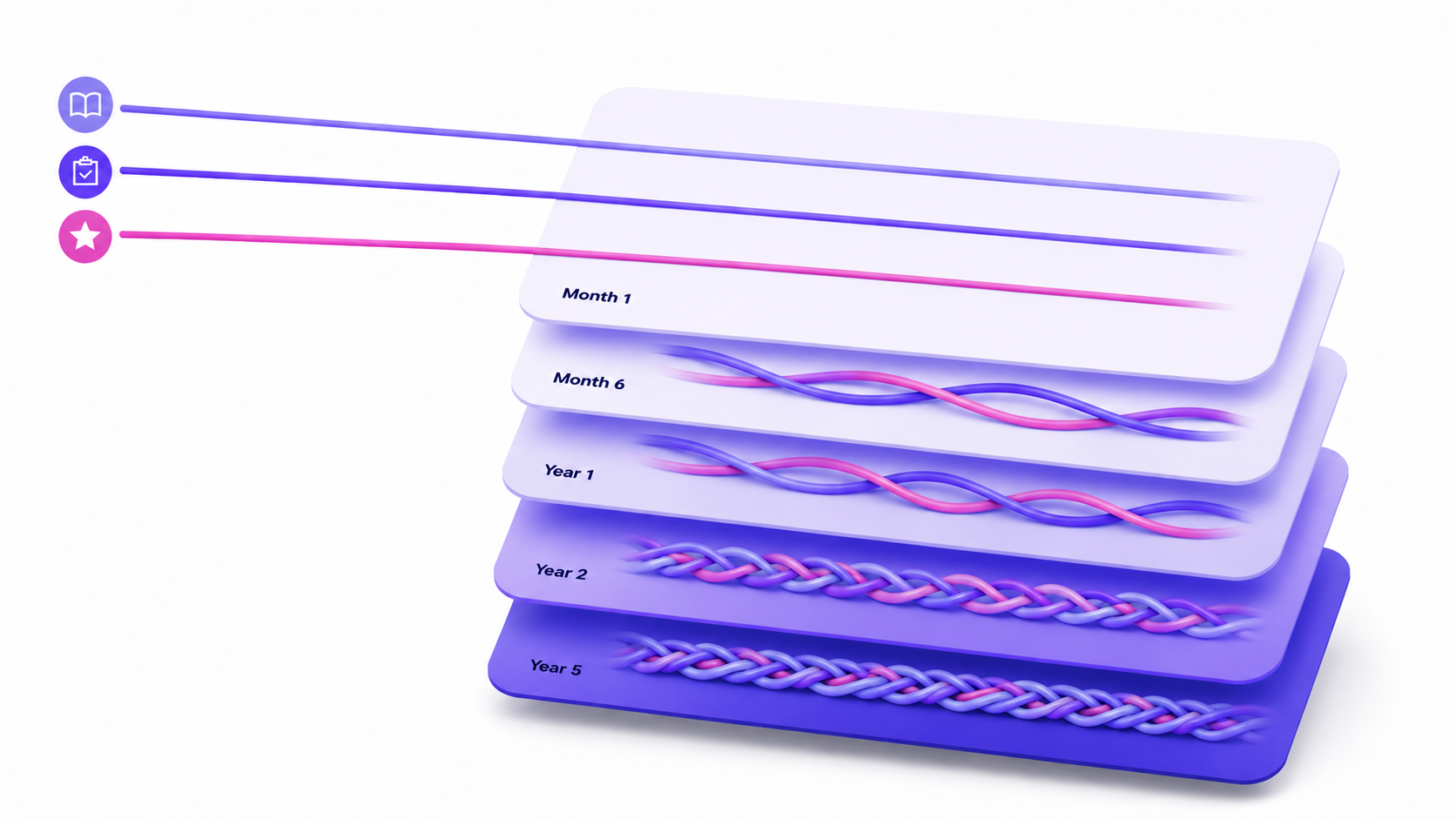
That's the real problem. Your frontline team doesn't lack digital habits. Your organisation lacks digital memory. Every photo, conversation, update, and workaround solves something in the moment, then disappears.
Right now, that photo the manager sent lands in a group chat. It gets seen once, by whoever happens to be online, and then it scrolls away and disappears under the next fifty messages.
Now picture the same photo, but it lives somewhere it's supposed to be.
Same instinct, same manager, same three seconds of effort, just a better home for it.
That's the whole shift. You're not changing frontline behaviour. You're giving it a system that can keep up with it.
Before:
After:
Nothing about her day changed. What happens to the information after she sends it is the only thing that's different.
The same shift applies across the rest of your frontline team's work too.
You don't need a six month rollout plan or a company-wide training day. Start with whatever your frontline team is already doing informally, in whichever area needs it most.
Pick the one that's causing the most friction right now. You're not introducing something new. You're formalizing something that already works.
Going digital for the first time sounds like a big leap - it isn't.
Every day, your frontline team creates hundreds of small pieces of operational knowledge, like photos, questions, updates, fixes, reminders. Right now, most of that disappears into chats, texts, and conversations.
Going digital isn't about creating more information. It's about capturing the information your frontline team is already generating.
P.S. We built our frontline platform to give operations, learning, and communication a shared home, because your frontline team already has the habits. They just need a system built around them.


A store manager notices the stockroom is a mess. She could note it on the paper checklist and wait for the weekly audit to catch it. Instead, she pulls out her phone, snaps a photo, and drops it into the store's group chat with a quick "someone needs to sort this today."
That's it, no training, no app download, no one told her to do this.
She just did what felt obvious.
This happens on almost every frontline team, every day, in some form.
Before any company rolls out a "digital transformation," this is already happening quietly across the frontline. It shows up in how frontline teams run operations, how they learn, and how they stay in the loop.
On the operations side:
On the learning side:
On the communications side:
None of this is official. None of it lives anywhere useful.
That's the real problem. Your frontline team doesn't lack digital habits. Your organisation lacks digital memory. Every photo, conversation, update, and workaround solves something in the moment, then disappears.
Right now, that photo the manager sent lands in a group chat. It gets seen once, by whoever happens to be online, and then it scrolls away and disappears under the next fifty messages.
Now picture the same photo, but it lives somewhere it's supposed to be.
Same instinct, same manager, same three seconds of effort, just a better home for it.
That's the whole shift. You're not changing frontline behaviour. You're giving it a system that can keep up with it.
Before:
After:
Nothing about her day changed. What happens to the information after she sends it is the only thing that's different.
The same shift applies across the rest of your frontline team's work too.
You don't need a six month rollout plan or a company-wide training day. Start with whatever your frontline team is already doing informally, in whichever area needs it most.
Pick the one that's causing the most friction right now. You're not introducing something new. You're formalizing something that already works.
Going digital for the first time sounds like a big leap - it isn't.
Every day, your frontline team creates hundreds of small pieces of operational knowledge, like photos, questions, updates, fixes, reminders. Right now, most of that disappears into chats, texts, and conversations.
Going digital isn't about creating more information. It's about capturing the information your frontline team is already generating.
P.S. We built our frontline platform to give operations, learning, and communication a shared home, because your frontline team already has the habits. They just need a system built around them.
Join the brands building better frontline workforces. Live in 50 days. No IT complexity. Dedicated support from day one.



.png)



.jpg)
.png)
.jpg)


.jpg)
.webp)


.jpg)

.jpg)




.png)