By
Sanjana Chavali
August 10, 2026
•
7
min read
Open most frontline software on day one and it works well. Open the same software two years later, and it works exactly the same way. Nothing about it has changed, because nothing about it was built to change.
A good salesperson gets sharper the longer they work a territory. A good manager gets better at reading their team the longer they manage it. Most software doesn't behave like either. It does the same job on day 730 that it did on day one, and everyone has quietly accepted that as normal.
We don't think it should be. Because the next generation of frontline software won't just help organizations work digitally. It will help them learn from the work they do every day.
The conversation around frontline super apps usually starts with consolidation, and rightly so. Instead of separate tools for learning, operations, and communication, organizations are increasingly looking for a frontline employee app that brings everything together: one platform, one source of truth, one place for managers and frontline teams to work. That's an important shift, but we'd say it's only the foundation. Once everything is connected, a much more interesting question appears: what should happen because it's connected?
Our answer comes down to one sentence.
Traditional software stores information.A frontline super app learns from it.
Traditional enterprise software is a system of record, whether it's an LMS for frontline teams, an audit tool, or a communication platform. You put data in, and later, you take data out. Nothing changes about that data in between.
A frontline super app becomes something different: a system of intelligence. Learning doesn't sit beside operations, operations don't sit beside recognition, and recognition doesn't sit beside AI. Each part continuously improves the others.
A system of record can tell you whether an employee completed their training. A system of intelligence can tell you which training actually reduced audit failures, which managers consistently develop top performers, which onboarding journey produces the fastest ramp-up, and which stores resolve customer complaints most effectively, and what they're doing differently. Those aren't reporting questions. They're operational questions, and no single tool, however good at its own job, can answer them alone.
Here's what happens when the different parts of a frontline platform don't simply coexist, but continuously improve one another.
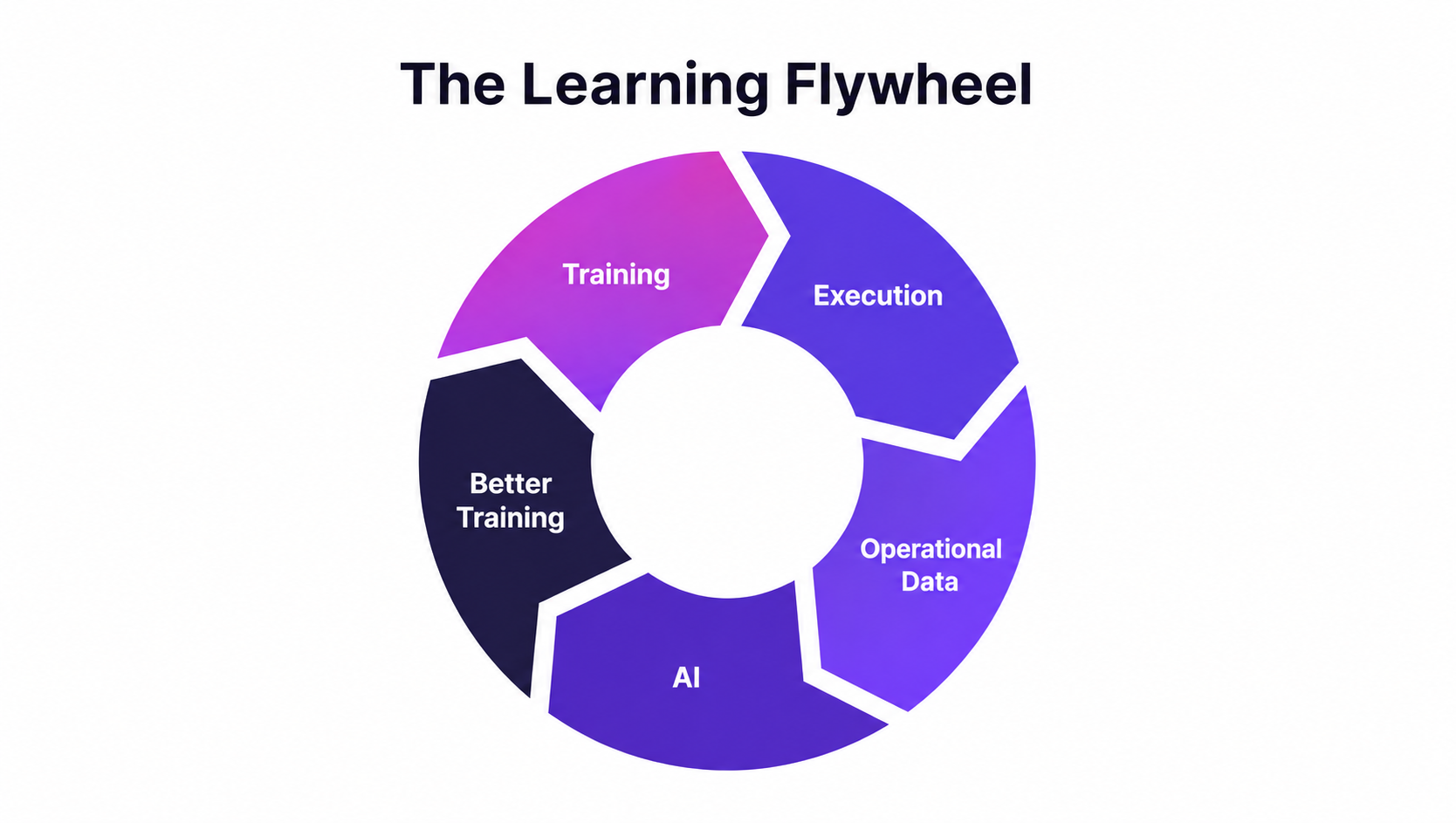
Unlike traditional frontline training software, training stops being something that's completed and forgotten. Every training interaction creates operational evidence, and the system sees what works, what doesn't, and who benefits from which approach. Six months later, employees aren't simply receiving the same content again. They're receiving better content because the organization has learned from real execution.
The same pattern appears in operations.
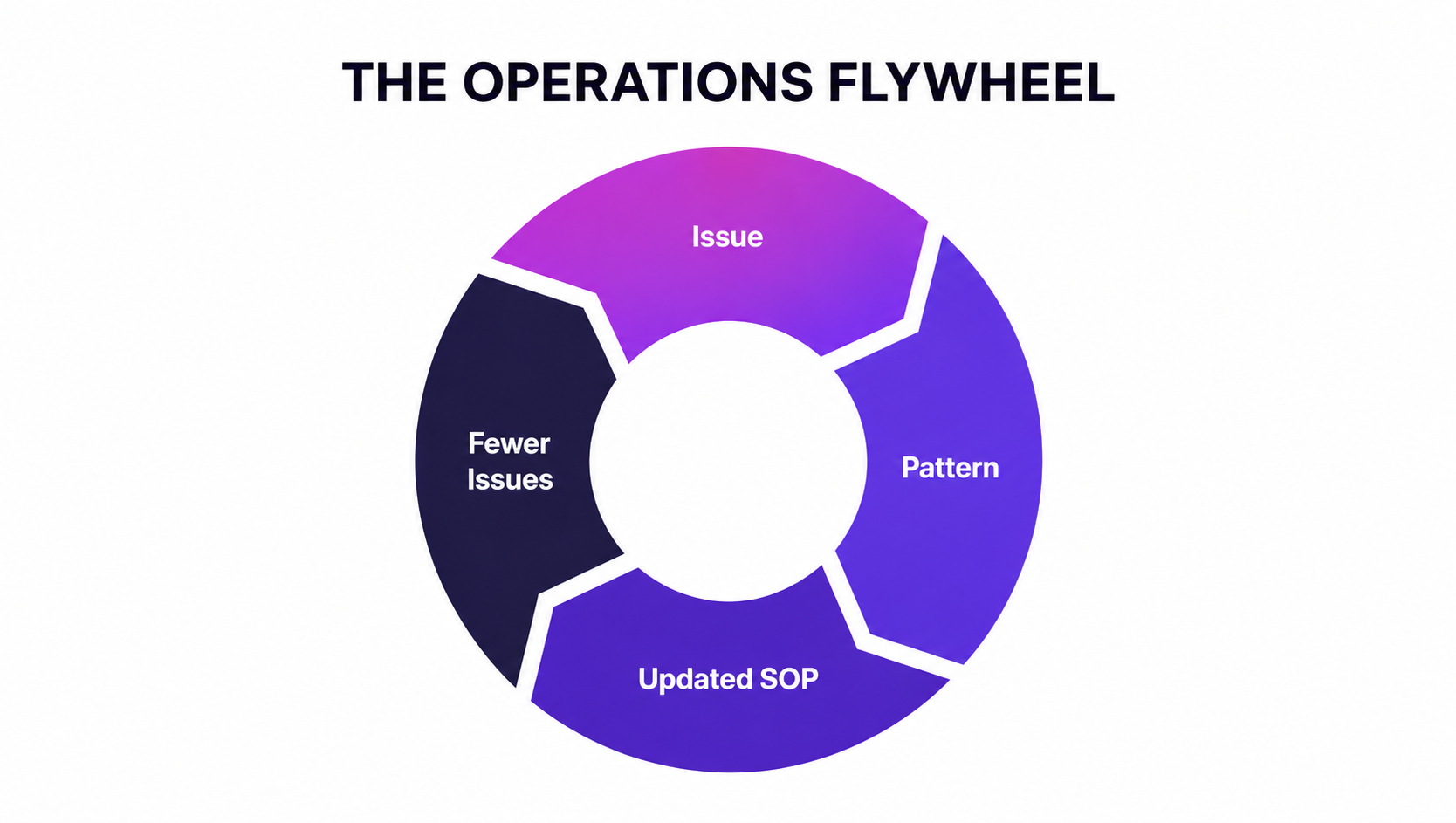
The system isn't waiting for someone to notice recurring problems in a monthly review. It sees patterns emerging across locations, identifies where processes are breaking down, and feeds those insights back into SOPs and training before small issues become organizational habits.
Knowledge begins moving sideways across the business too, not just forward through time. A store in Bengaluru solves a customer issue, and two weeks later, another store in Jaipur encounters the same situation. Without a connected platform, that second store starts from zero. With one, it starts with what the organization already knows.
This is the advantage that doesn't arrive with a product release. It emerges over time.
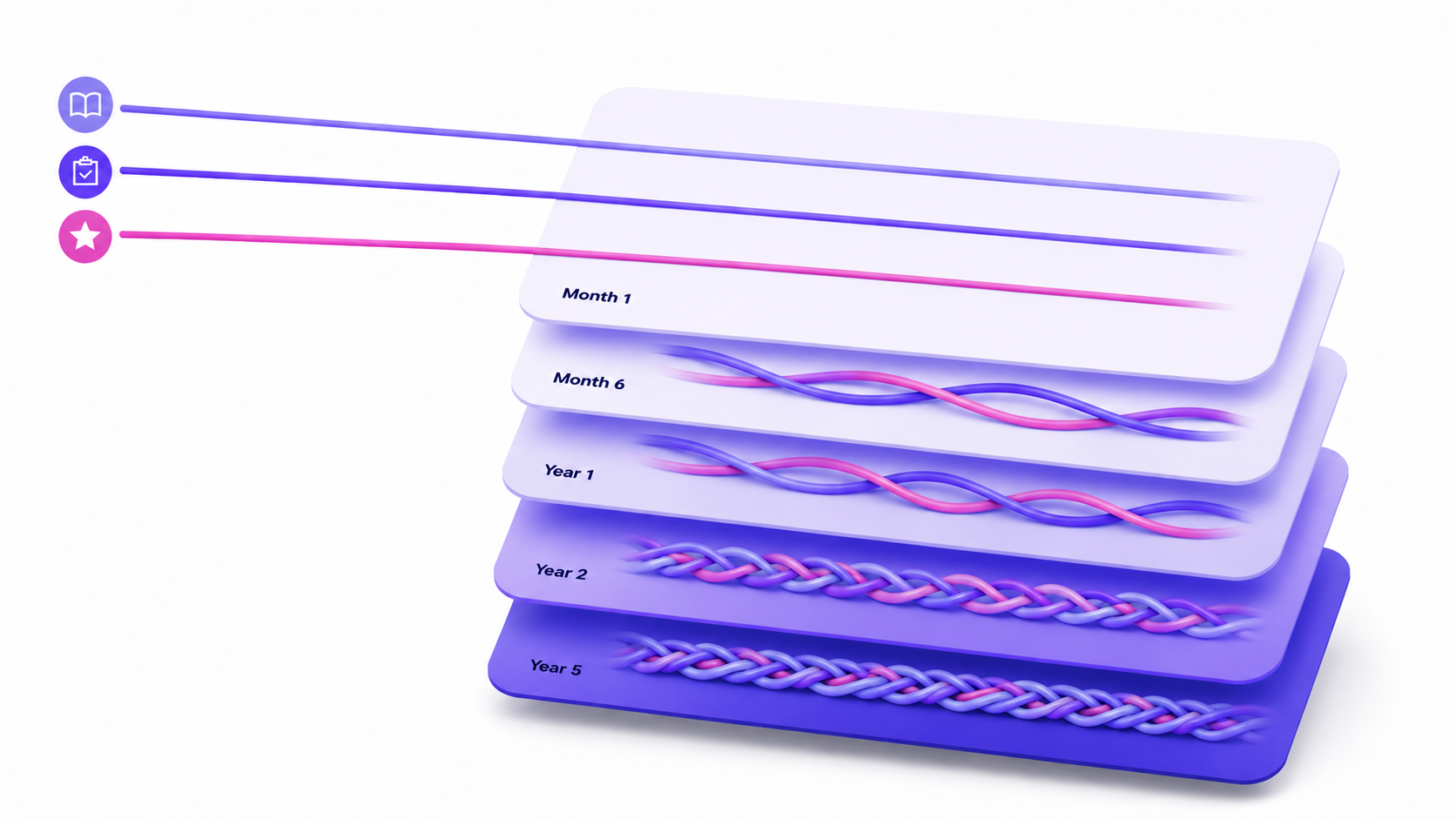
Month one, the platform knows who your employees are. Month six, it knows who needs coaching. Year one, it knows which training changes behavior. Year two, it knows which managers consistently create high performers. By year five, it has become something closer to your organization's operating memory.
That isn't because someone shipped another feature. It's because every audit, training session, operational issue, and AI conversation adds a little more context, making the platform slightly better at understanding how the organization actually works.
Compare that with a point solution over the same period. A ticketing system records more tickets, an LMS stores more courses, and a survey platform collects more responses. Those systems become richer in data over time, but not necessarily smarter because of it.
The first generation of enterprise software digitized work. Paper became forms, forms became dashboards, and dashboards became reports.
The next generation will do something different. It will learn from work. That's the real promise of a frontline super app, not simply replacing five applications with one.
But ensuring every interaction leaves the organization slightly smarter than it was the day before.
That's the compounding advantage.
This is the idea Frontlyne was built around from the beginning. Learning, operations, AI, and career growth come together in a frontline super app, not as separate products that happen to share a login, but designed to continuously strengthen one another, so the platform becomes more valuable the longer your organization uses it. That's what we believe a frontline super app should ultimately become.


Open most frontline software on day one and it works well. Open the same software two years later, and it works exactly the same way. Nothing about it has changed, because nothing about it was built to change.
A good salesperson gets sharper the longer they work a territory. A good manager gets better at reading their team the longer they manage it. Most software doesn't behave like either. It does the same job on day 730 that it did on day one, and everyone has quietly accepted that as normal.
We don't think it should be. Because the next generation of frontline software won't just help organizations work digitally. It will help them learn from the work they do every day.
The conversation around frontline super apps usually starts with consolidation, and rightly so. Instead of separate tools for learning, operations, and communication, organizations are increasingly looking for a frontline employee app that brings everything together: one platform, one source of truth, one place for managers and frontline teams to work. That's an important shift, but we'd say it's only the foundation. Once everything is connected, a much more interesting question appears: what should happen because it's connected?
Our answer comes down to one sentence.
Traditional software stores information.A frontline super app learns from it.
Traditional enterprise software is a system of record, whether it's an LMS for frontline teams, an audit tool, or a communication platform. You put data in, and later, you take data out. Nothing changes about that data in between.
A frontline super app becomes something different: a system of intelligence. Learning doesn't sit beside operations, operations don't sit beside recognition, and recognition doesn't sit beside AI. Each part continuously improves the others.
A system of record can tell you whether an employee completed their training. A system of intelligence can tell you which training actually reduced audit failures, which managers consistently develop top performers, which onboarding journey produces the fastest ramp-up, and which stores resolve customer complaints most effectively, and what they're doing differently. Those aren't reporting questions. They're operational questions, and no single tool, however good at its own job, can answer them alone.
Here's what happens when the different parts of a frontline platform don't simply coexist, but continuously improve one another.
Unlike traditional frontline training software, training stops being something that's completed and forgotten. Every training interaction creates operational evidence, and the system sees what works, what doesn't, and who benefits from which approach. Six months later, employees aren't simply receiving the same content again. They're receiving better content because the organization has learned from real execution.
The same pattern appears in operations.
The system isn't waiting for someone to notice recurring problems in a monthly review. It sees patterns emerging across locations, identifies where processes are breaking down, and feeds those insights back into SOPs and training before small issues become organizational habits.
Knowledge begins moving sideways across the business too, not just forward through time. A store in Bengaluru solves a customer issue, and two weeks later, another store in Jaipur encounters the same situation. Without a connected platform, that second store starts from zero. With one, it starts with what the organization already knows.
This is the advantage that doesn't arrive with a product release. It emerges over time.
Month one, the platform knows who your employees are. Month six, it knows who needs coaching. Year one, it knows which training changes behavior. Year two, it knows which managers consistently create high performers. By year five, it has become something closer to your organization's operating memory.
That isn't because someone shipped another feature. It's because every audit, training session, operational issue, and AI conversation adds a little more context, making the platform slightly better at understanding how the organization actually works.
Compare that with a point solution over the same period. A ticketing system records more tickets, an LMS stores more courses, and a survey platform collects more responses. Those systems become richer in data over time, but not necessarily smarter because of it.
The first generation of enterprise software digitized work. Paper became forms, forms became dashboards, and dashboards became reports.
The next generation will do something different. It will learn from work. That's the real promise of a frontline super app, not simply replacing five applications with one.
But ensuring every interaction leaves the organization slightly smarter than it was the day before.
That's the compounding advantage.
This is the idea Frontlyne was built around from the beginning. Learning, operations, AI, and career growth come together in a frontline super app, not as separate products that happen to share a login, but designed to continuously strengthen one another, so the platform becomes more valuable the longer your organization uses it. That's what we believe a frontline super app should ultimately become.
Join the brands building better frontline workforces. Live in 50 days. No IT complexity. Dedicated support from day one.


.png)
.png)


.jpg)
.png)
.jpg)


.jpg)
.webp)


.jpg)

.jpg)

.jpg)
.png)
.png)
.png)
.png)