By
Sanjana Chavali
June 10, 2026
•
6
min read

A store associate sits through a two-hour product training session. The trainer covers everything: features, pricing, comparisons with competitors. The associate nods, takes a pamphlet, and goes back to the floor.
Three weeks later, a customer asks about that product. The associate gives the wrong answer, or no answer at all.
The training happened. The behavior didn't change. And this isn't a motivation problem or a people problem. It's a design problem. Classroom training was never built to change behavior; it was built to deliver content, and those are two very different things. And for frontline retail training in India, that distinction is costing businesses more than they realise.
Behavioral science is clear on what makes learning stick and translate into action, and three conditions matter most.
Classroom training, as it's typically delivered in Indian retail, structurally fails all three.
A classroom session happens on a Tuesday and the product launches on Saturday. By the time a customer asks a question, the associate's memory of Tuesday's training has degraded significantly. [Ebbinghaus's forgetting curve research showed that without reinforcement, people forget up to 70% of new information within 24 hours of a single learning event.] Classroom training fights the forgetting curve with nothing.
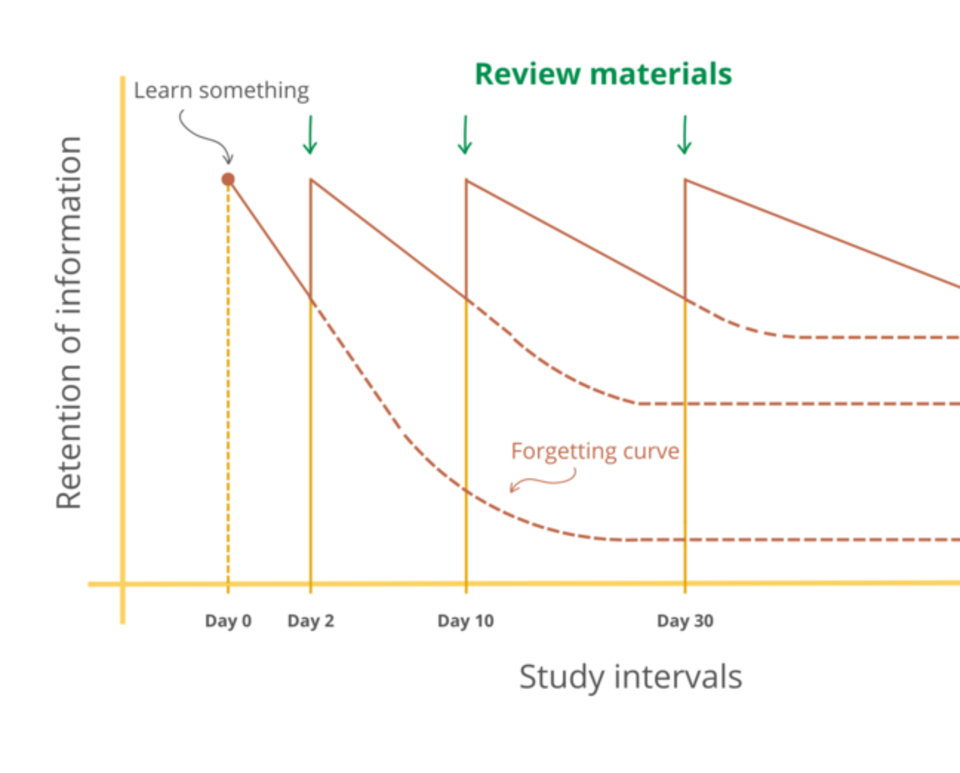
Most retail training is a one-time event where staff attend once, content is delivered once, and the assumption is that it was absorbed. But retention doesn't work this way, and a single session, however well-designed, creates surface familiarity rather than durable knowledge that shows up under pressure on the shop floor.
In a classroom, feedback comes from a trainer in a group setting, which creates two problems. First, it's slow, so you might not know you misunderstood something until the end of the session, if at all. Second, it's social, meaning people perform for the room, and associates who didn't understand something often won't say so in front of colleagues. The trainer reads the room as engaged, and the gaps stay hidden.
Sitting and listening feels like learning, but it isn't. Active recall, which is the act of retrieving information from memory, is what actually builds retention. [Research by Roediger and Karpicke (2006) found that retrieval practice significantly outperforms passive review for long-term retention, a finding now widely referred to as the testing effect.] A classroom session where associates watch slides and listen to a trainer is almost entirely passive, with no retrieval happening and no behavior being reinforced.
This isn't about phones being more convenient. It's about mobile learning being structurally better aligned with how behavior actually changes, particularly for frontline retail teams who learn in short windows, on the floor, between customer interactions.
Consider a new skincare range launching at a mid-size retail chain, with two stores handling the same product through different training approaches.
Store A runs a classroom session on Monday where the trainer covers the range, staff listen, and a printed sheet goes on the noticeboard. By Saturday's launch, most staff remember fragments, and when customers ask detailed questions, answers vary by associate depending on what each person happened to retain.
Store B pushes a five-minute mobile module on Tuesday, a follow-up quiz on Thursday, and a reminder module on Friday morning. By Saturday, every associate has encountered the material three times, answered questions on it, and received feedback on what they got wrong. When customers ask, the answers are consistent across the floor.
Same product, same staff calibre, different behavioral outcome because the training was designed around behavior change rather than content delivery.
Most retail training measures completion because completion is easy to track and easy to report, but it tells you nothing about behavior. The right question isn't whether staff finished the module; it's whether the behavior changed on the floor. Did customer-facing responses improve? Did quiz scores reflect understanding or guessing? Can the manager see evidence of the training in how staff actually work? Behavior change requires evidence, not attendance records.
Indian retail runs on frontline performance, and every customer interaction, every product recommendation, every complaint handled is frontline behavior. Training that doesn't change that behavior isn't an investment; it's a cost with no return. The classroom was never designed for the frontline worker's reality, and mobile training, designed around proximity, repetition, and fast feedback, is built for exactly that reality.


A store associate sits through a two-hour product training session. The trainer covers everything: features, pricing, comparisons with competitors. The associate nods, takes a pamphlet, and goes back to the floor.
Three weeks later, a customer asks about that product. The associate gives the wrong answer, or no answer at all.
The training happened. The behavior didn't change. And this isn't a motivation problem or a people problem. It's a design problem. Classroom training was never built to change behavior; it was built to deliver content, and those are two very different things. And for frontline retail training in India, that distinction is costing businesses more than they realise.
Behavioral science is clear on what makes learning stick and translate into action, and three conditions matter most.
Classroom training, as it's typically delivered in Indian retail, structurally fails all three.
A classroom session happens on a Tuesday and the product launches on Saturday. By the time a customer asks a question, the associate's memory of Tuesday's training has degraded significantly. [Ebbinghaus's forgetting curve research showed that without reinforcement, people forget up to 70% of new information within 24 hours of a single learning event.] Classroom training fights the forgetting curve with nothing.
Most retail training is a one-time event where staff attend once, content is delivered once, and the assumption is that it was absorbed. But retention doesn't work this way, and a single session, however well-designed, creates surface familiarity rather than durable knowledge that shows up under pressure on the shop floor.
In a classroom, feedback comes from a trainer in a group setting, which creates two problems. First, it's slow, so you might not know you misunderstood something until the end of the session, if at all. Second, it's social, meaning people perform for the room, and associates who didn't understand something often won't say so in front of colleagues. The trainer reads the room as engaged, and the gaps stay hidden.
Sitting and listening feels like learning, but it isn't. Active recall, which is the act of retrieving information from memory, is what actually builds retention. [Research by Roediger and Karpicke (2006) found that retrieval practice significantly outperforms passive review for long-term retention, a finding now widely referred to as the testing effect.] A classroom session where associates watch slides and listen to a trainer is almost entirely passive, with no retrieval happening and no behavior being reinforced.
This isn't about phones being more convenient. It's about mobile learning being structurally better aligned with how behavior actually changes, particularly for frontline retail teams who learn in short windows, on the floor, between customer interactions.
Consider a new skincare range launching at a mid-size retail chain, with two stores handling the same product through different training approaches.
Store A runs a classroom session on Monday where the trainer covers the range, staff listen, and a printed sheet goes on the noticeboard. By Saturday's launch, most staff remember fragments, and when customers ask detailed questions, answers vary by associate depending on what each person happened to retain.
Store B pushes a five-minute mobile module on Tuesday, a follow-up quiz on Thursday, and a reminder module on Friday morning. By Saturday, every associate has encountered the material three times, answered questions on it, and received feedback on what they got wrong. When customers ask, the answers are consistent across the floor.
Same product, same staff calibre, different behavioral outcome because the training was designed around behavior change rather than content delivery.
Most retail training measures completion because completion is easy to track and easy to report, but it tells you nothing about behavior. The right question isn't whether staff finished the module; it's whether the behavior changed on the floor. Did customer-facing responses improve? Did quiz scores reflect understanding or guessing? Can the manager see evidence of the training in how staff actually work? Behavior change requires evidence, not attendance records.
Indian retail runs on frontline performance, and every customer interaction, every product recommendation, every complaint handled is frontline behavior. Training that doesn't change that behavior isn't an investment; it's a cost with no return. The classroom was never designed for the frontline worker's reality, and mobile training, designed around proximity, repetition, and fast feedback, is built for exactly that reality.
Join the brands building better frontline workforces. Live in 50 days. No IT complexity. Dedicated support from day one.



.jpg)


.png)


%20-%20Copy.png)


.jpg)





.png)